



A reliable internet connection can make a significant difference when working, traveling, or staying connected across different locations. Public WiFi may not always be available or suitable for multiple devices, while mobile data on individual phones can become inconvenient when laptops, tablets, or other equipment also need access.
This is where portable WiFi options can provide a practical alternative. A dedicated hotspot can create a shared connection for several devices while keeping connectivity separate from a primary smartphone. GlocalMe offers different types of mobile hotspots, with variations in network performance, device capacity, battery life, and design. The right portable WiFi device depends less on having the most features and more on how the connection will actually be used.

What to Consider When Comparing Portable WiFi Options
Different users place different demands on a mobile connection. Someone who mainly checks maps and messages has very different requirements from a remote worker connecting a laptop and tablet throughout the day. Several factors are worth considering before comparing individual devices.
Network Performance
Network technology affects how quickly data can be transferred and how responsive a connection feels. 4G LTE is sufficient for many common activities, including web browsing, navigation, social media, music streaming, and video calls.
Within 4G, network performance can also vary according to the category supported by the device and the available operator network. Local coverage and congestion remain important.
Number of Connected Devices
The number of devices sharing a connection can influence which hotspot is most appropriate. A smartphone used alone places relatively little demand on a hotspot, while a laptop, tablet, phone, and other connected equipment can increase overall usage. For families, small groups, and people working while traveling, a hotspot that supports up to 10 devices can provide enough capacity without requiring separate mobile connections for every device.
Battery Life
Battery life matters when a hotspot is used away from a reliable power source. A device may be carried during sightseeing, commuting, road trips, or outdoor work, making longer operating time useful.
Size and Portability
The main advantage of a dedicated hotspot is that it can travel with the user. However, a device that is carried every day should not create unnecessary bulk. A slim and lightweight hotspot can be particularly useful for travelers who spend long periods moving between locations.
Choosing a Portable WiFi Device by Usage
Once the basic specifications are understood, the next step is to consider the type of connectivity required. The same portable WiFi options can have very different advantages depending on the user's daily routine.
Everyday Browsing and Travel
Travelers often need internet for navigation, transportation apps, accommodation information, messaging, email, and social media. These activities generally do not require the highest possible network performance.
In this situation, a compact 4G hotspot with sufficient battery life and multi-device support can be more useful than choosing a device primarily for maximum speed.
Remote Work and Productivity
Remote work places more consistent demands on connectivity. A laptop may remain connected for several hours, while video meetings, cloud services, document sharing, and other applications run throughout the workday.
For this type of use, network reliability, battery life, and the ability to connect several devices become more important. A dedicated portable WiFi device can also keep a laptop or tablet connected without requiring the phone to function as a hotspot continuously.
Family and Group Connectivity
A family or small group may have several smartphones, tablets, laptops, and other devices online at the same time. Sharing one hotspot can simplify connectivity, particularly when traveling between destinations. The number of supported devices is therefore an important consideration. A hotspot designed for up to 10 connections can cover many common group travel scenarios.
Long Days Away From Power
Some trips involve long periods without access to charging. Sightseeing, road travel, outdoor activities, and mobile work can all make battery life a practical priority. In these cases, a hotspot with a larger battery and extended operating time can reduce the frequency of recharging. Actual battery performance will still depend on network conditions and usage patterns.
Why SIM-free Portable WiFi Can Be Useful
Traditional mobile hotspots often depend on a physical SIM card and a local mobile plan. SIM-free hotspot models can offer a different approach by using cloud-based connectivity to select an available network. This can be particularly useful for international travel, where changing countries may otherwise involve finding compatible SIM cards or managing different mobile plans.
Network Switching Across Destinations
Coverage can vary significantly between countries and regions. A hotspot with automatic network selection can help maintain connectivity by choosing an available operator based on local network conditions.
GlocalMe uses CloudSIM technology in its hotspot range, with some devices also using HyperConn to intelligently select available networks.
One Connection for Multiple Devices
A dedicated hotspot can provide one connection point for phones, laptops, tablets, and other WiFi-enabled devices. This can be more convenient than configuring mobile data separately on every device. For travelers moving between destinations, this approach also keeps the connectivity setup consistent across the trip.
GlocalMe Portable WiFi Options
GlocalMe's 4G hotspot options illustrate how similar connectivity capabilities can be packaged for different preferences. Both models support up to 10 connected devices and coverage across more than 200 countries and regions, but their designs and feature sets serve somewhat different needs.
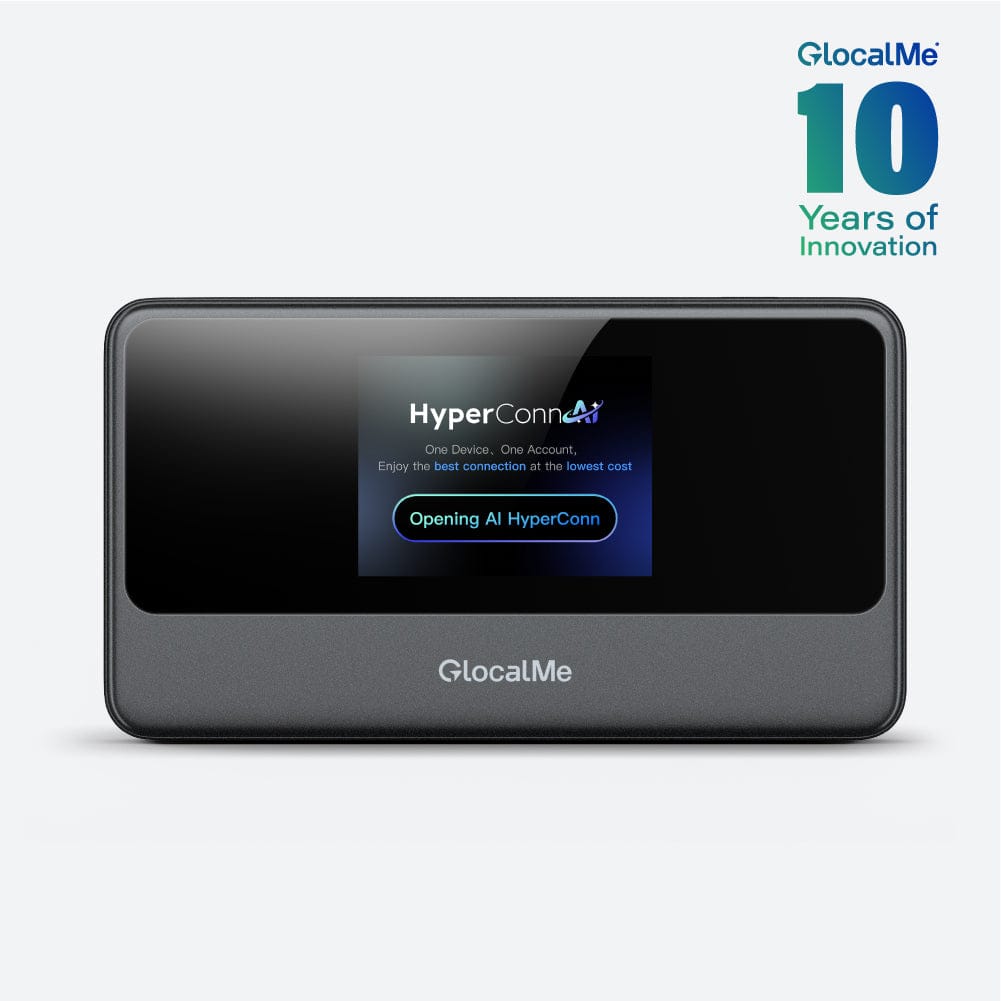
GlocalMe MeowGo G40 Pro for Lightweight Connectivity

The GlocalMe MeowGo G40 Pro SIM-free portable WiFi hotspot is built around portability and extended everyday use. It weighs only 0.28lb and includes a 3200mAh battery that can provide up to 15 hours of operation.
The device supports WiFi 5 and 4G CAT13 connectivity, while HyperConn and CloudSIM technology can intelligently switch to an available network. It supports up to 10 connected devices, making it suitable for travelers, remote workers, and small groups that want a compact connection hub.
Its lightweight design makes it particularly relevant when a hotspot needs to remain in a bag or pocket throughout the day.
GlocalMe G4 Pro for Touchscreen Control

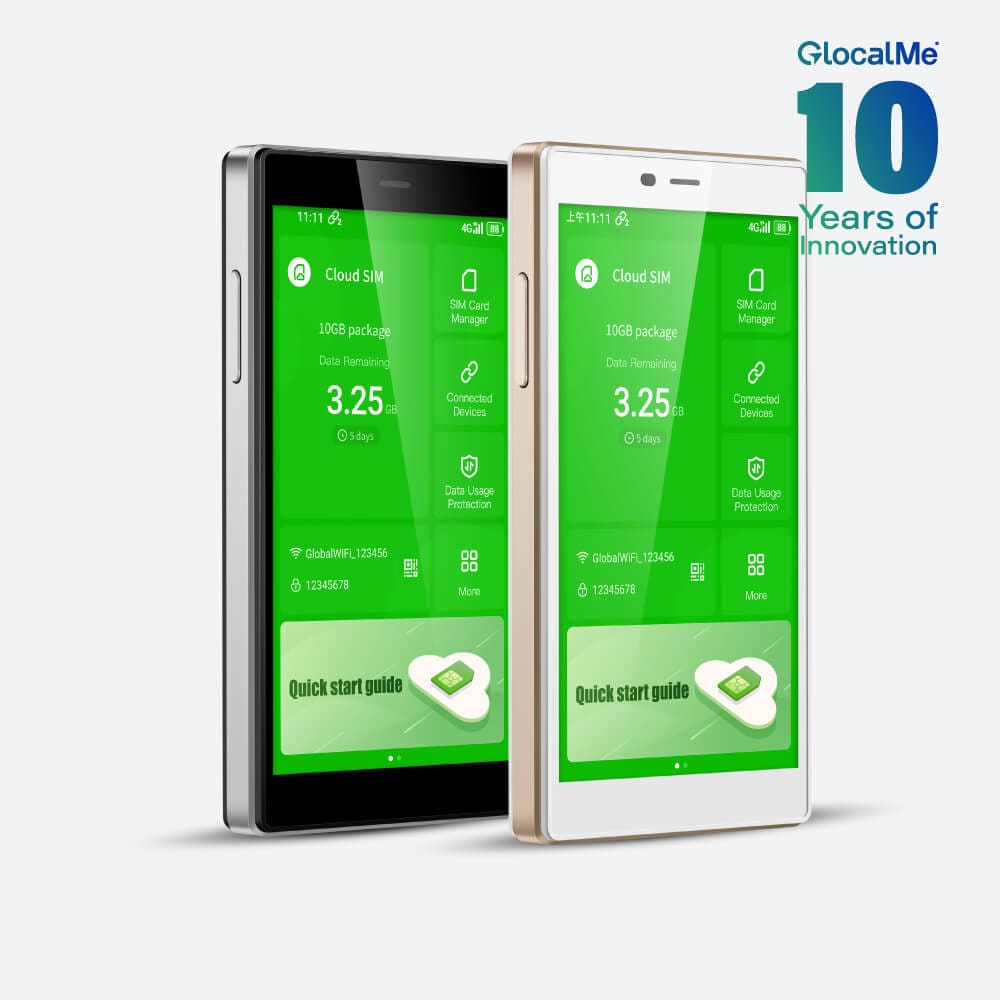
The GlocalMe G4 Pro LTE mobile hotspot takes a different approach with a built-in 5-inch touchscreen. The display provides a more direct way to interact with the device and check its connection information.
It supports 4G connectivity across more than 200 countries and regions and can connect up to 10 devices. Its 3900mAh battery provides more than 12 hours of continuous operation, while CloudSIM can automatically switch to the best available 4G operator. The G4 Pro can therefore appeal to travelers who value a larger interface and straightforward device control alongside shared 4G connectivity.
GlocalMe Portable WiFi Options Compared
The two devices share several fundamental characteristics, including multi-device connectivity and international 4G coverage. Their differences become more relevant when portability, battery capacity, and device interaction are considered together.
| Feature | GlocalMe MeowGo G40 Pro | GlocalMe G4 Pro |
| Network | 4G LTE | 4G LTE |
| Coverage | 200+ countries and regions | 200+ countries and regions |
| Connected devices | Up to 10 | Up to 10 |
| Battery | 3200mAh | 3900mAh |
| Battery life | Up to 15 hours | More than 12 hours |
| Weight | 0.28lb | 0.414lb |
| WiFi technology | WiFi 5 | WiFi 5 |
| Network technology | HyperConn and CloudSIM | CloudSIM |
| Main advantage | Lightweight design and extended battery life | 5-inch touchscreen and larger battery |
The comparison shows that neither model is simply a replacement for the other. The G40 Pro places greater emphasis on low weight, extended operating time, and compact everyday connectivity. The G4 Pro adds a larger touchscreen and a higher-capacity battery for users who value direct device interaction.
How to Choose Among Portable WiFi Options
The most suitable portable WiFi options depend on the balance between connectivity requirements and practical preferences.
For lightweight travel, long days away from charging, and everyday 4G connectivity, the G40 Pro offers a compact combination of battery life and multi-device support. Its low weight can be especially useful for travelers who carry the hotspot throughout the day.
For users who prefer a larger interface and want to interact directly with the hotspot through a touchscreen, the G4 Pro provides a different user experience while maintaining support for up to 10 connected devices and 4G coverage across more than 200 countries and regions.
The broader decision should also account for the number of devices, expected usage, destination coverage, battery requirements, and how often the hotspot will be carried.
Finding the Right Portable WiFi Device
Network availability matters, but so do battery life, connected device capacity, physical design, and the way internet access is used throughout the day. A traveler who values minimal weight may prioritize a compact device with extended battery life. A remote worker may focus more on sustained connectivity and multi-device support. Someone who prefers direct control over the hotspot may find a touchscreen more useful.
By comparing these factors together, it becomes easier to narrow down the available portable WiFi options and select a portable WiFi device that fits the actual demands of the trip, rather than simply choosing a hotspot based on a single specification.


